
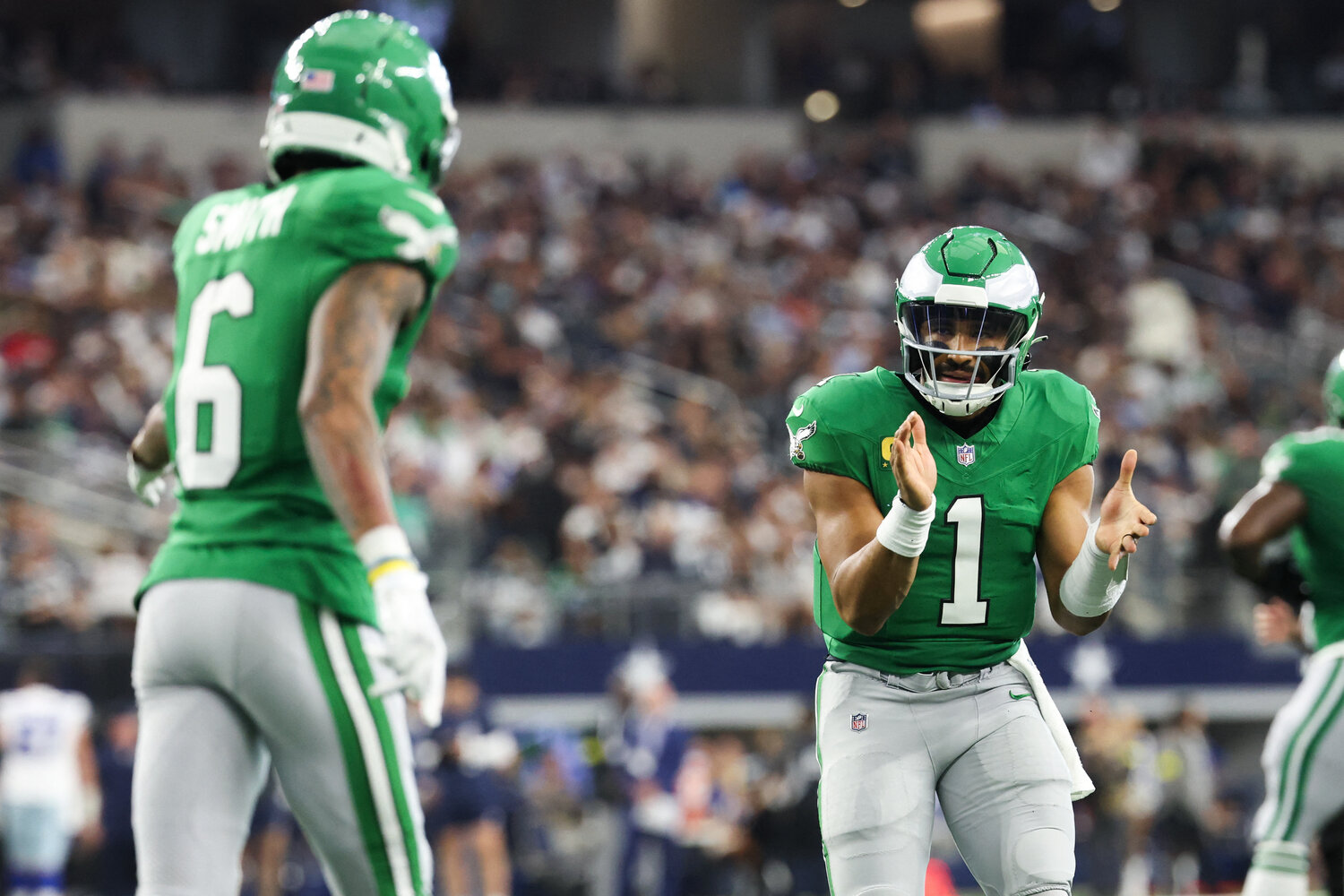
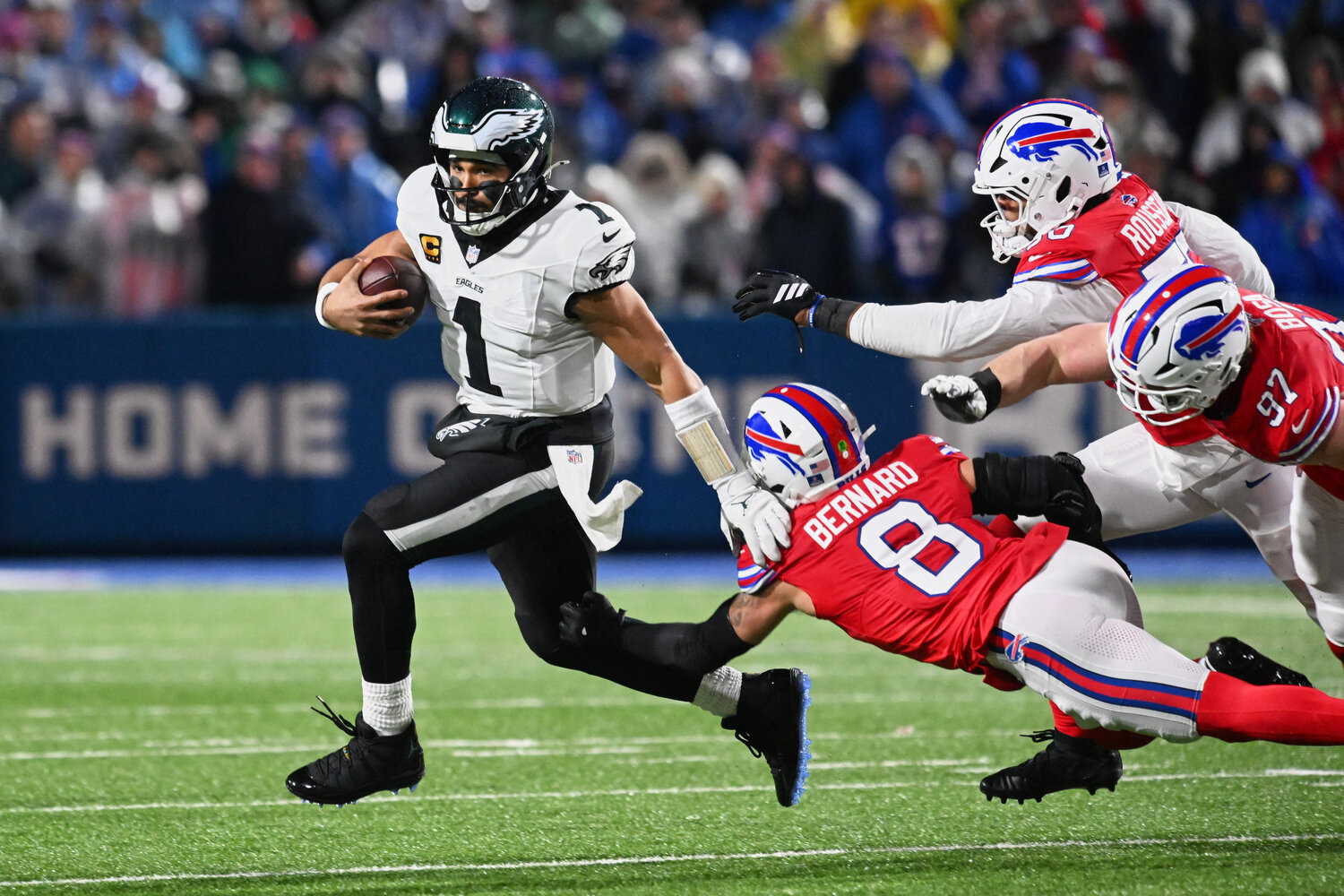


The Philadelphia Eagles head into 2026 with a new offensive coordinator, offensive line coach, running game coordinator, and quarterback coach. The expectation is that the Eagles' offense will be drastically different as well. There are five league trends that Philadelphia will likely follow, including a shift toward modernizing its offense.
Daire Carragher of Pro Football Focus highlighted these trends.
The honeymoon with run-pass option (RPOs) appears to be on the way out in the NFL. Usage has fallen to approximately 8%, and according to most statistical sites, this is the third consecutive year of decline. College football still uses them frequently, but the novelty appears to have worn off in the NFL.
What Jalen Hurts and the Philadelphia Eagles have built isn’t just packaged run-pass option plays; it’s conflict intentionally created at every level to stress opposing defenses. His ability as a runner forces second-level defenders to hesitate. The hesitation creates doubt. The Eagles don’t need the RPO to hit for explosives every time; they need it to make the defense uneasy and unsure of itself. The explosive plays will follow.
With the addition of Hollywood Brown, who brings vertical speed to the offense, it will be interesting to see how Sean Mannion blends this element with their dynamic quarterback. It may be a new variation of one of their best weapons for the City of Brotherly Love.
Pre-snap motion is the cheat code for identifying coverage, and it is now used in 64% of plays. Forcing defenses to declare their intent is information too valuable to ignore. How the Eagles use it with their 3 wide receivers could do much more than just identify coverage; it will tell them how to exploit it.
If a corner travels with Smitty, they are facing man coverage, which prevents the cornerbacks from pressing AJ Brown. He doesn't need help winning, but every advantage is important, and he will exploit those mismatches by taking the free space, which gives him a runway to show off that power and leverage.
Utilizing the speed of Hollywood not only identifies coverages but also causes defenders to catch up to him while he is already moving. That additional aspect stresses defensive backs' pursuit angles and creates communication issues.
Base personnel usage has increased to nearly 30% among NFL defenses. This is quite a reversal after years of nickel dominance. Multiple tight end personnel, a sixth lineman, and condensed formations have defenses now countering with size. Most college linebackers can run and cover, and when they get to the NFL, this allows coordinators to use this formation without sacrificing defensive flexibility. An offense with answers to combat this alignment could be incredibly hard to stop.
The Eagles are typically patient when facing base defenses, and the type of defense they can use their RPOs to exploit linebackers who creep forward with a pass behind them. They can take advantage in the run game when safeties stay back, and if the edge rushers go wide, Hurts can keep it and exploit the middle. Much of this was sorely missing last season.
Limiting explosive plays has become all the rage lately and is a modern defense's top priority. Cover-4 and Cover-6 now account for roughly a quarter (no pun intended) of all passing coverages in the National Football League. This defensive alignment is designed to keep the ball in front of the defenders, forcing an offense to play methodically, mistake-free football for long drives rather than getting burned by a 50+-yard play that leads to a score. The Eagles will need to have answers in the short game to sustain drives.
A successful run game to lure the safeties in and using motion to manipulate them will be one of the keys to beating quarters. The defense is designed to limit explosive plays; they need to be right every time for it to work. The Eagles' offense only needs to be right once per drive to inflict damage and put up points.
Man coverage has dropped to just under 23% of defensive usage, its lowest level in years. The math and analytics more often than not favor zone coverage, and coordinators are playing those percentages far more frequently. The Eagles were successful in years past by beating man coverage because they had superior wide receivers. Defenses are doing their best to take that advantage away.
Moving forward, the Eagles' offensive brain trust will have to find ways to counter these trends and be prepared with play designs and schemes to exploit the new defensive alignments. Staying modern offensively hasn't been the Eagles' approach over the last few seasons, but there may be a changing of the guard in 2026.
As always, thank you for reading!
Follow me on X @DavidNeiszPHL


